






TFI Global

Innovation
Begins
Within™

We help people change how they think, how they relate, and how they lead—creating meaningful impact that lasts.

Three women in a collaborative conversation framed by teal and mint brushstrokes
01Change how people think
02Change how people relate
03Change how organizations move

New ways to begin

Explore. Reflect. Put learning to work.

The TFI Global Learning Hub brings together guided reflection, practical learning, and ideas from TFI Global Press.

Explore the Learning Hub →

Listen in

Take a moment to listen.

A short audio feature from TFI Global. Press play when you are ready.

Audio · 1 minute 34 seconds

Our approach

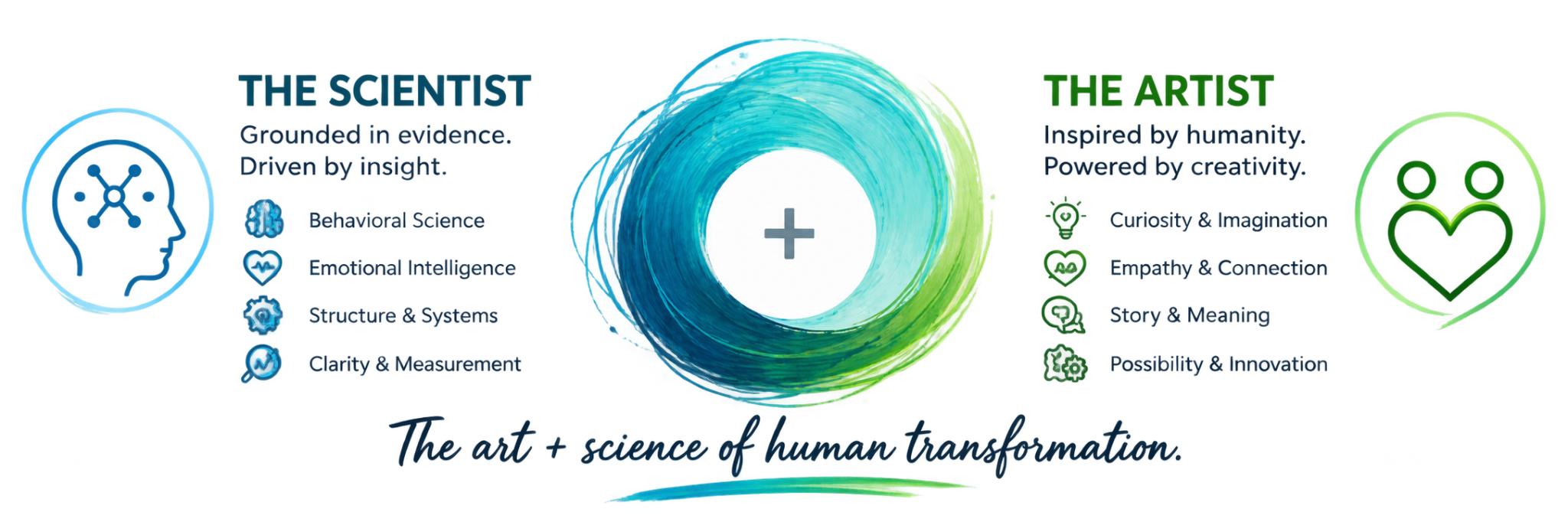
The Scientist: behavioral science, emotional intelligence, structure and systems, clarity and measurement. The Artist: curiosity, empathy, story and meaning, possibility and innovation. Together, the art and science of human transformation.

The Scientist

Grounded in evidence. Driven by insight.

  • Behavioral science
  • Emotional intelligence
  • Structure & systems
  • Clarity & measurement

The Artist

Inspired by humanity. Powered by creativity.

  • Curiosity & imagination
  • Empathy & connection
  • Story & meaning
  • Possibility & innovation
Evidence and empathy work together to make change human and practical. Explore the Scientist + Artist →
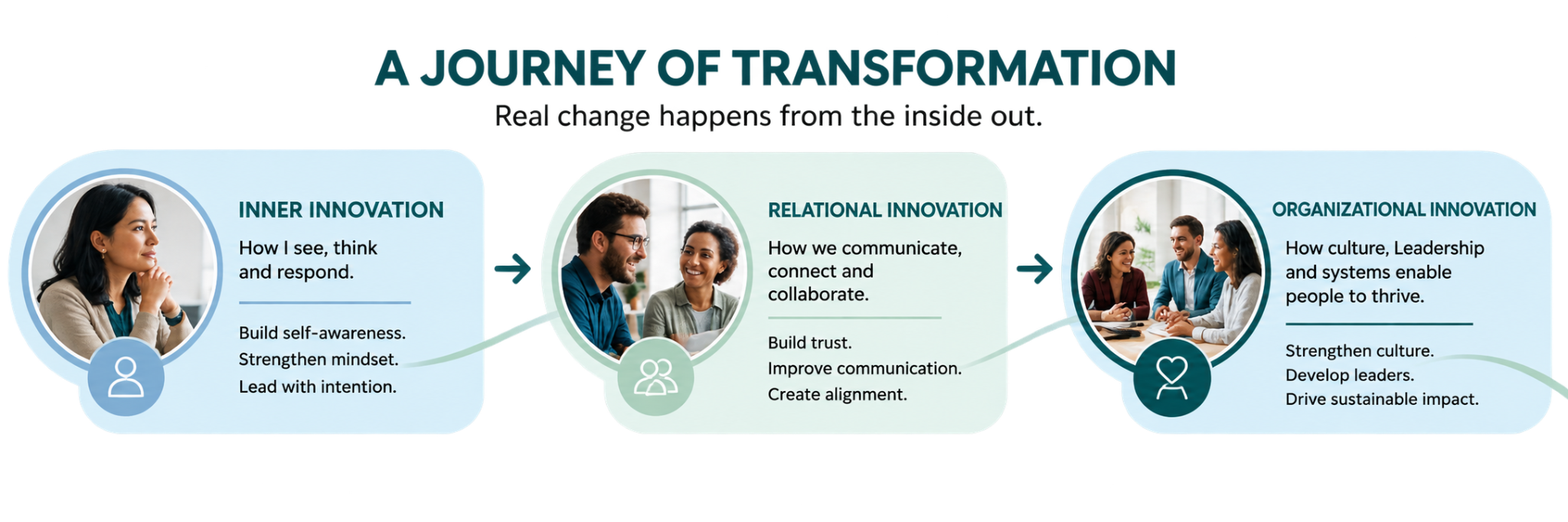
A journey of transformation: inner innovation builds self-awareness and intention; relational innovation builds trust and communication; organizational innovation strengthens culture, leadership and sustainable impact.
01 / SELF

Inner innovation

Build self-awareness, strengthen mindset, and lead with intention.

02 / RELATIONSHIPS

Relational innovation

Build trust, improve communication, and create alignment.

03 / ORGANIZATIONS

Organizational innovation

Strengthen culture, develop leaders, and support lasting impact.

Real change happens from the inside out.

Two connected paths

How we partner with you

Explore the Institute’s learning experiences and the Consultancy’s tailored transformation work.

THE FOLKE INSTITUTE GLOBAL

Innovation Institute

Learning experiences, leadership development, retreats, and thought leadership that expand human capacity.

Explore the Institute

TFI GLOBAL

Transformation Consultancy

Executive coaching, organizational consulting, and culture transformation designed around your context.

Explore the Consultancy

Our work

How we partner with you

Executive Coaching: Unlock potential. Navigate complexity. Elevate leadership.Organizational Consulting: Solve real challenges. Design human-centered solutions.Culture Transformation: Shape environments where people and performance flourish.Learning Experiences and Retreats: Immersive experiences that inspire growth and connection.Keynotes and Thought Leadership: Fresh perspectives. Practical insights. Lasting impact.

Leadership & partners

Meet the people behind the work

Dr. Carrie Spell-Hansson

Dr. Carrie Spell-Hansson

Founder & Chief Executive Officer

Sawyer Meierdirk

Sawyer Meierdirk

Chief Strategy and Co-Creation Officer

April Hamey

April Hamey

Chief Brand and Growth Officer

Help shape the future

Build the next chapter with us.

Explore opportunities to contribute ideas, expertise, long-term guidance, or funding to the emerging field of Human-Centered Innovation.

Explore founding partnerships →

Begin the work

Transformation begins with awareness.

What becomes possible when you change the way you see, relate, and lead?

Let's Connect →

The Folke Institute Global

A place to learn, connect, and begin again.

The Innovation Institute brings people together around learning experiences that build awareness, strengthen relationships, and open new possibilities.

Explore a Partnership →

A facilitator and participants exchange ideas around a workshop table
Learn together. Grow together.

Our purpose

Human growth creates lasting change.

We combine behavioral science, emotional intelligence, creativity, and reflection to help people see differently and lead with greater intention.

Learning is most powerful when it moves beyond information into practice, connection, and action.

The three beginnings

A question. A realization. A greater purpose.

Every transformation starts somewhere. The Institute creates space to explore what may be possible next.

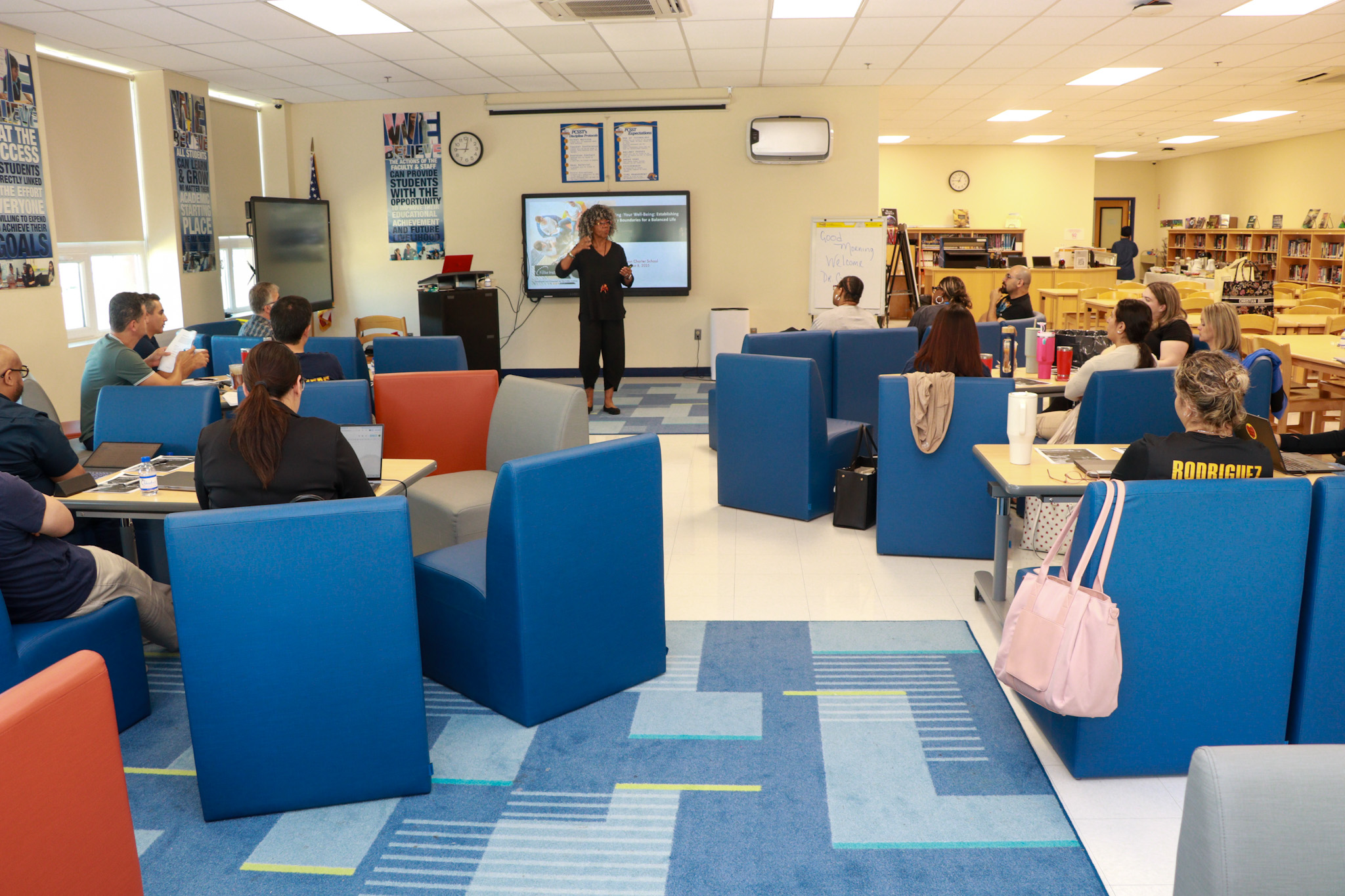
Facilitator leading a learning session with participants seated in small groups

The Institute in practice

Learning happens together.

Our experiences create space for people to pause, ask better questions, and practice new ways of working.

Ways to learn together

01

Leadership experiences

Develop the awareness and habits to lead people through change and complexity.

02

Retreats & convenings

Step out of routine, build connection, and move from insight to shared action.

03

Keynotes & thought leadership

Ideas that challenge assumptions and make human transformation practical.

Let’s shape an experience for your people.

Let's Connect →

TFI Global Transformation Consultancy

Change that takes root from the inside out.

We partner with leaders and organizations to turn human insight into stronger relationships, healthier cultures, and meaningful performance.

Participants and facilitator in a group learning conversation
Insight into action.

Our partnership

Grounded in your reality.

Real organizational challenges need more than an off-the-shelf answer. We listen, diagnose, co-design, and support the people who will carry the change forward.

The best strategy works because people can see themselves in it.

The transformation path

Think. Relate. Lead. Move.

We connect individual insight, relational trust, and organizational systems to support change that lasts.

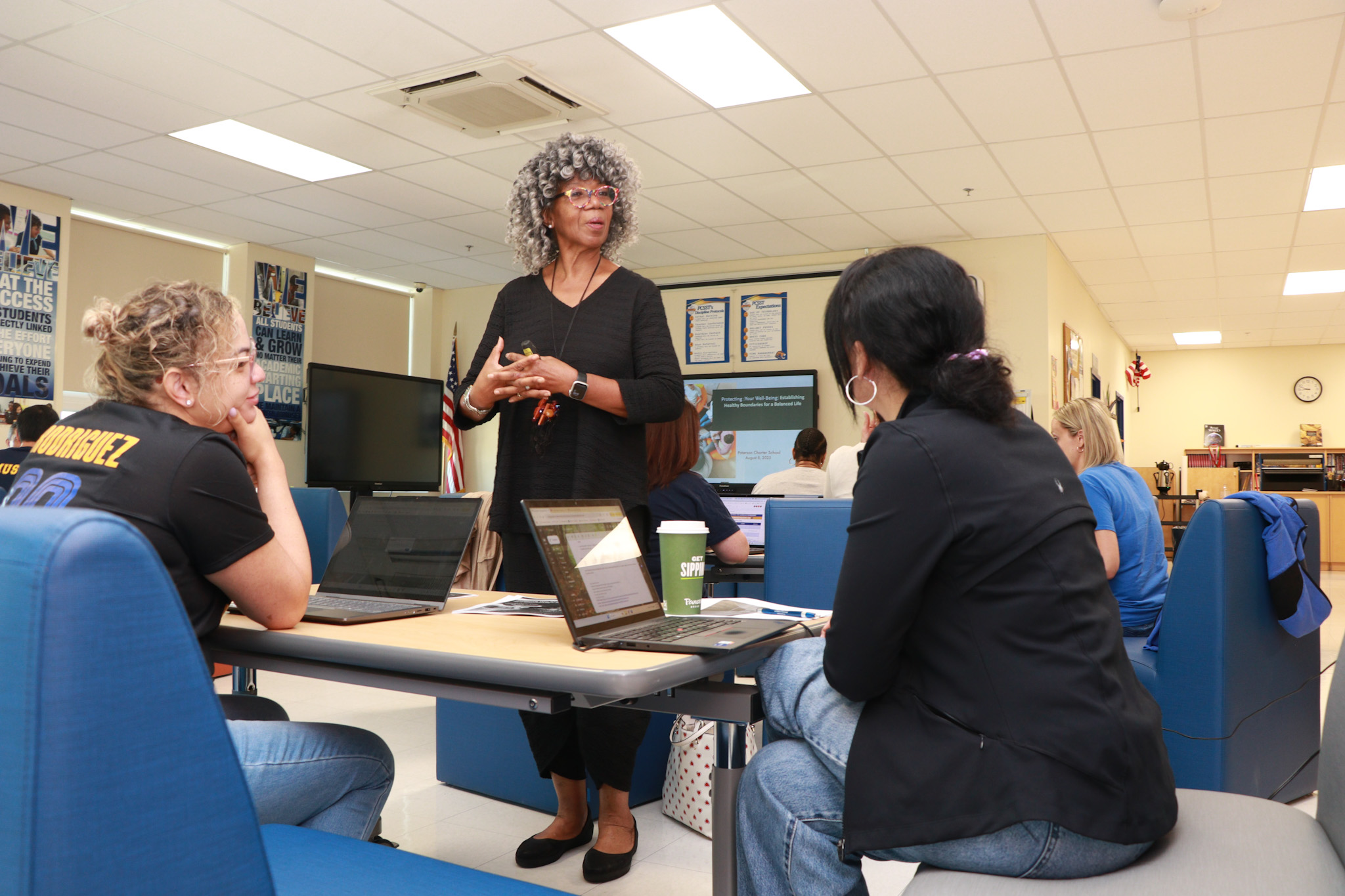
Facilitator speaking with a small group during an interactive workshop

Collaboration in action

Change starts with a conversation.

We work alongside groups to surface assumptions, strengthen connection, and turn insight into next steps.

How we can work together

Executive coaching

Space for leaders to gain clarity, navigate complexity, and strengthen their impact.

Organizational consulting

Human-centered approaches to alignment, leadership, and change.

Culture transformation

Build habits, systems, and environments where people and performance thrive.

Let’s talk about the change you want to create.

Let's Connect →

About TFI Global

Innovation begins with people.

TFI Global is a human-centered institute dedicated to transforming how people and organizations operate from the inside out.

Dr. Carrie Spell-Hansson in a blue dress
People make possibility real.

Our point of view

We integrate emotional intelligence, behavioral science, and creative insight to unlock meaningful, sustainable innovation.

We expand people's capacity to think, relate, and lead. From individual awareness, new possibilities open for teams and organizations.

Our belief

Innovation is a human endeavor.

When insight and imagination work together, change becomes both practical and personal.

Our way of working

The Scientist + The Artist

At TFI Global, meaningful human transformation calls for both disciplined inquiry and imagination. We study what is and make room to envision what could be.

Explore our approach →

The art and science of transformation

Evidence meets empathy.

Research, human connection, creativity, and practical insight work together.

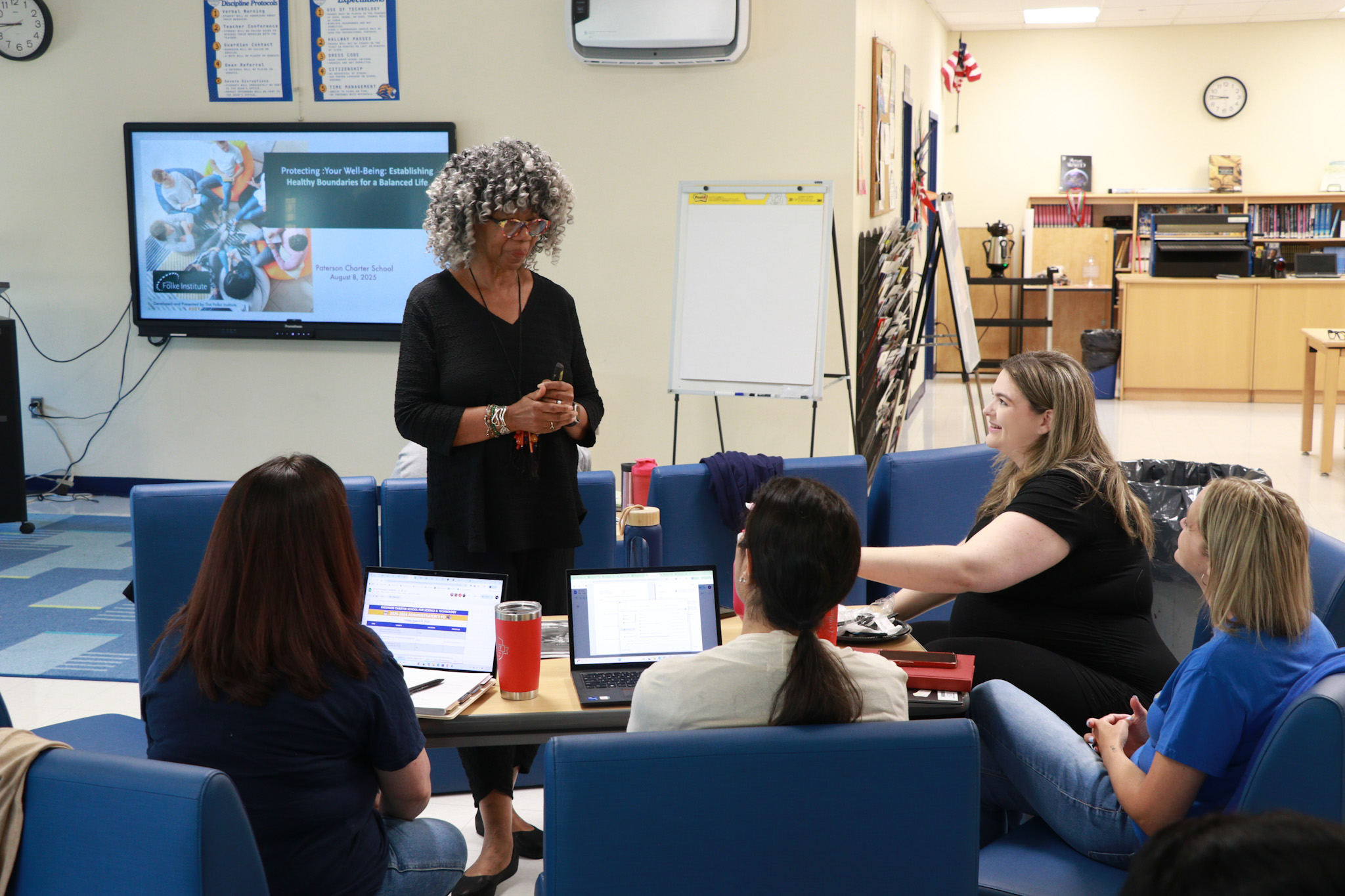
Facilitator and participants engaged in conversation during a group learning session

Our work, in the room

The people are the point.

TFI Global's work is grounded in conversation, reflection, and the relationships that make change possible.

Leadership & partners

Meet the people behind the work

Dr. Carrie Spell-Hansson

Dr. Carrie Spell-Hansson

Founder & Chief Executive Officer

Sawyer Meierdirk

Sawyer Meierdirk

Chief Strategy and Co-Creation Officer

April Hamey

April Hamey

Chief Brand and Growth Officer

← About TFI Global

Our way of working

The Scientist + The Artist

At TFI Global, we recognize that meaningful human transformation requires both the discipline of the scientist and the imagination of the artist.

We are both.

THE ART AND SCIENCE OF HUMAN TRANSFORMATION What is.
What could be.
Evidence and imagination, working together

Our dual lens

The Scientist + The Artist

We bring together evidence and intuition, rigor and creativity, inquiry and imagination to understand people and organizations as they are today while creating space for what they can become.

The Scientist

Understanding what is.

Grounded in research, evidence, and human behavior, we look beneath the surface to uncover patterns, challenge assumptions, and bring clarity to complex human and organizational challenges.

The Artist

Imagining what could be.

Guided by curiosity, intuition, creativity, and human connection, we see possibility beyond the familiar and create space for new perspectives, new ideas, and new ways of thinking and being.

Where Science Meets Art

The Scientist helps us understand what is.
The Artist helps us imagine what could be.

Together, they shape how we approach human transformation: with evidence and empathy, structure and creativity, insight and imagination.

The art and science of human transformation.

Read Dr. Carrie's full perspective →

What We Do

Transformation with a human center.

Choose an entry point that meets your goals. Our work connects personal growth, relationships, and organizational change.

OUR APPROACHTHINK.
RELATE.
LEAD.
The work begins within and moves outward.
THE INSTITUTE

Learn & discover

Leadership experiences, retreats, keynotes, and ideas that inspire growth.

See Institute offerings
THE CONSULTANCY

Design & transform

Coaching, organizational consulting, and culture work tailored to your context.

See Consultancy offerings

The full picture

Explore our scope of services.

From AI change and workforce learning to coaching, culture, and evaluation, see how we tailor the work to your goals.

View Scope of Services →
← What We Do

TFI Global | Scope of Services

Learning and change, designed around people.

The Folke Institute, Inc. (TFI Global) provides leadership development, organizational effectiveness, workforce training, and human-centered organizational transformation.

Discuss your goals →
TFI GLOBAL / OUR SERVICESLEARN.
ADAPT.
TRANSFORM.
Innovation Begins Within™

A changing world of work

AI change with people at the center.

We help organizations and individuals build the understanding, skills, and confidence to use AI with intention.

01 / CHANGE

AI Change Management

Support organizations and people as AI changes work: assess readiness, engage stakeholders, equip leaders, and help teams adopt new ways of working.

02 / LEARNING

AI Training & Development Plans

Create practical training and customized development and engagement plans that meet learners where they are and turn new capabilities into everyday practice.

Professional services

Our primary areas of work

Every engagement is shaped to the organization's context, goals, and people.

01

Leadership and Management Development

Customized training for executives, managers, supervisors, emerging leaders, and high-potential employees.

02

Organizational Development and Change Management

Organizational assessments, culture transformation, strategic planning, team effectiveness, and change leadership.

03

Professional Development and Workforce Training

Curriculum design, interactive workshops, employee development programs, and in-person, virtual, and hybrid training.

04

Executive Coaching and Leadership Assessments

Individual and group coaching, emotional intelligence assessments, leadership competency development, and performance improvement.

05

Strategic Communication and Conflict Resolution

Workplace communication, difficult conversations, conflict management, collaboration, and relationship building.

06

Inclusive Leadership and Workplace Culture

Respectful workplace practices, psychological safety, employee engagement, belonging, and equitable leadership.

07

Research, Assessment, and Program Evaluation

Organizational research, training needs assessments, employee surveys, program evaluations, and actionable recommendations.

Selected experience

Setting the tone for inclusive leadership.

TFI Global previously partnered with the Port Authority of New York and New Jersey to design and deliver its Setting the Tone for Inclusive Leadership learning series for managers and supervisors through customized in-person and virtual training programs.

Our approach

Research-informed. Made for real work.

We design and deliver learning solutions that strengthen leadership capabilities, improve organizational performance, and support sustainable workplace transformation.

Engagements can be delivered in person, virtually, or in a hybrid format.

What does your organization need next?

Let's shape a learning or change strategy that fits your people and goals.

Start a Conversation →

Who We Serve

For people ready to move forward.

We meet leaders, teams, organizations, and individuals at the point where curiosity becomes commitment.

WHO WE PARTNER WITHLEADERS
TEAMS
ORGANIZATIONS
INDIVIDUALS
Growth is a shared practice.

Not sure where to start?

Start with a conversation.

Let's Connect →

Partner with TFI Global

Help build what comes next.

Human-Centered Innovation deserves an enduring home. Join the people and institutions helping turn an emerging field into research, learning, collaboration, and lasting practice.

The invitation

Build an institution that can outlast any one program or person.

TFI Global is developing a home for Human-Centered Innovation, bringing scholarship and practice into conversation through research, education, applied work, leadership development, and global collaboration.

Our founding period calls for different kinds of contribution: people who create, people who carry the purpose forward, and partners who provide resources to make the work possible.

The question before us

What can we make possible together?

We welcome a conversation about the contribution that fits your expertise, interests, relationships, or funding priorities.

Three pathways. One institution.

Find your way to contribute.

These pathways can overlap. A funding partner may also contribute expertise or help steward the work over time.

01 / CREATE

Founding Builders

Help shape and develop TFI Global during its formative period through ideas, scholarship, practical expertise, relationships, programs, partnerships, or resources.

Explore becoming a Builder
02 / SUSTAIN

Founding Stewards

Bring long-term perspective to the institution's purpose, identity, continuity, and direction as it grows and evolves.

Explore stewardship
03 / ENABLE

Investment & Funding Partners

Provide financial capacity for research, learning, intellectual property, infrastructure, partnerships, and strategic growth. Forms may include grants, sponsorships, philanthropic support, and structured funding partnerships.

Discuss funding

Participation and any designation are discussed individually. A financial contribution does not automatically confer a Founding Builder or Founding Steward designation.

What support can enable

From possibility to lasting capacity.

Funding and collaboration can help create the infrastructure for meaningful work across disciplines and borders. The right focus will depend on shared interests and the institution's evolving needs.

  • Research and scholarship
  • Learning programs and leadership development
  • Scholar-practitioner collaborations
  • Intellectual property development and validation
  • Technology and institutional infrastructure
  • Global partnerships and convenings

The next chapter

Every enduring institution is built together.

Whether you bring capital, knowledge, relationships, or long-term guidance, we would welcome a conversation about the part you might play.

Begin a Partnership Conversation →

TFI Global Resources

A foundation for what comes next.

Four connected pieces introduce the ideas behind our work. Each answers a different question, and together they offer a place to begin.

Begin reading →
THE FOUNDATIONAL COLLECTION What we believe.
How we work.
What becomes possible.
Four pieces · One developing body of thought

Start here

Four questions. Four distinct perspectives.

Explore the framework, the history, the proposition, and the lens that guide TFI Global.

01 / The framework · About 5 min

What Is Human-Centered Innovation?

What do we mean by Human-Centered Innovation? Begin with people, then explore the work within, between us, and across organizations.

Read the article

02 / The history · About 5 min

The Evolution of TFI Global’s Taglines

Trace the connection between Teaching the Process of Unlearning to Learn™ and Innovation Begins Within™.

Read the article

03 / The proposition · About 5 min

Why Innovation Begins Within™

Go beneath visible innovations to the awareness, unlearning, relationships, and judgment that shape what we create.

Read the article

04 / The lens · About 5 min

The Scientist + The Artist

See how disciplined inquiry and human imagination work together in TFI Global’s approach to change.

Read the article

Continue exploring

Additional reading

More perspectives on leadership, empathy, resilience, connection, and the human side of change.

Article · October 2026

What Is Leadership?

How do daily choices build trust, create opportunities, and help others move forward?

Read the article

Article · July 2026

The Current Beneath the Current

What drives the sense of division beneath our everyday conversations, and how can awareness help us reconnect?

Read the article

Article · July 2026

The Empathy Gap

We know people carry unseen struggles. Why do our judgments so often outrun our empathy?

Read the article

Article · July 2026

When the Story About You Isn't Yours

An experience with a viral image becomes a reflection on assumptions, resilience, and staying grounded in who we are.

Read the article

Reflection

The Bounce Back Maven

An oak tree offers a picture of resilience: stay rooted, bend through difficulty, and grow stronger.

Read the reflection

The larger conversation

Within. Between. Together.

Our writing will grow across Personal Transformation, Relational Transformation, and Organizational Transformation. These dimensions connect the work within ourselves, the work between us, and the work we create together.

A growing library

Ideas that invite inquiry.

The four foundational pieces introduce our thinking. Additional perspectives and new contributions from the TFI Global ecosystem will continue to grow this library.

Continue the conversation.

Where could a new way of seeing open a new possibility?

Let's Connect →
← Foundational writing

01 / The framework

What Is Human-Centered Innovation?

Putting People at the Center of How We Think, Create, and Transform

We are living in an age of extraordinary innovation. Artificial intelligence, automation, emerging technologies, and rapidly changing systems are transforming how we live and work. Organizations are being challenged to adapt faster, think differently, and continually reconsider what is possible. Yet innovation is not simply about what we can create or how quickly we can create it. An equally important question is whether what we create genuinely serves the human beings whose lives it is intended to improve.

That question is at the heart of Human-Centered Innovation (HCI). At its core, Human-Centered Innovation is an approach to developing ideas, systems, services, experiences, and solutions that begins with a deep understanding of people: their needs, values, experiences, relationships, challenges, and aspirations. Rather than treating people simply as the recipients of innovation, HCI places them at the center of the process and recognizes their experiences and perspectives as essential sources of knowledge.

Innovating with people

Human-Centered Innovation changes the starting point of the innovation process. Instead of beginning primarily with the question, What can we build?, it asks us to consider, What do people need, and what can we learn from their experiences? This shift may appear subtle, but it changes both the process and the outcome of innovation.

When we begin with people, listening becomes as important as expertise. Curiosity becomes as important as certainty. We become more willing to engage the people closest to a challenge and recognize that lived experience can reveal information that cannot always be discovered from a distance. The people affected by a problem are no longer viewed simply as end users or recipients of a solution. They can become participants in understanding the challenge and co-creators of what comes next.

Three dimensions of Human-Centered Innovation

At TFI Global, we understand Human-Centered Innovation through three interconnected dimensions: Inner Innovation, Relational Innovation, and Organizational Innovation. Together, they allow us to look beyond innovation solely as an external outcome and consider the human conditions that influence whether meaningful innovation can occur.

Inner Innovation is the work within. It focuses on the human capacities that shape how we think, respond, create, adapt, and lead. Self-awareness, mindset, identity, emotional agility, resilience, curiosity, and reflection all influence how we encounter change and possibility. Our assumptions affect what we notice. Our experiences influence how we interpret what we see. Our ability to reflect and reconsider can determine whether we remain attached to familiar answers or become open to something new. At this level, Human-Centered Innovation invites us to consider the question: Who am I becoming?

Relational Innovation is the work between us. Innovation rarely happens in isolation. Ideas develop through conversations, relationships, differences, disagreements, collaboration, and collective imagination. The quality of those relationships matters. Trust affects whether people speak honestly. Psychological safety affects whether they are willing to question an idea or offer an unconventional one. Empathy and cultural intelligence influence whether we can understand experiences different from our own. Communication determines whether diverse perspectives become a source of insight or a source of division. Relational Innovation therefore asks: How do we relate to one another?

Organizational Innovation is the work we create together. Organizations are human systems, and their strategies, structures, policies, practices, and cultures reflect the thinking and behaviors of the people who create and sustain them. Organizational Innovation considers how leadership, culture, systems, and strategy can create environments in which both people and ideas can thrive. It asks organizations to examine not only what they want to change, but also whether their existing structures and cultures support the behaviors, relationships, experimentation, and learning that meaningful change requires. At this level, the central question becomes: What can we become together?

These three dimensions are distinct, but they are not separate. What happens within individuals influences how they relate to others. Relationships shape teams and cultures. Cultures influence systems, decisions, and organizational behavior. Those systems, in turn, affect the people who live and work within them. Human-Centered Innovation requires us to see these relationships and to understand innovation as something that can occur within people, between people, and throughout the organizations and systems they create.

Why it matters now

The importance of Human-Centered Innovation becomes even more pronounced as technology grows increasingly sophisticated. Artificial intelligence and other emerging technologies are expanding what individuals and organizations are capable of doing, often at a pace that challenges our ability to fully understand the implications. This makes the human questions surrounding innovation more important, not less important.

No matter how advanced our technology becomes, people continue to seek meaning, trust, belonging, dignity, opportunity, and connection. They want to know whether they are heard, whether their contributions matter, whether they can participate meaningfully in decisions that affect them, and whether the systems being created will improve their lives rather than simply increase efficiency.

Human-Centered Innovation ultimately asks us to create with people rather than simply for them, to understand before assuming, and to remain attentive to the relationship between human experience and the solutions we develop. It challenges us to recognize that the future will not be shaped by technology, systems, or ideas alone. It will also be shaped by the human beings who imagine them, the relationships through which they emerge, and the organizations and cultures that bring them to life.

← All foundational writing
← Foundational writing

02 / The history

The Evolution of TFI Global’s Taglines

From Process to Origin: A Philosophy More Than 20 Years in the Making

Organizations evolve, and the language they use to describe themselves often evolves with them. Sometimes a change in language signals an entirely new direction. At other times, it reflects something more subtle and perhaps more significant: a deeper understanding of what has been present all along.

For TFI Global, the evolution from Teaching the Process of Unlearning to Learn™ to Innovation Begins Within™ represents that kind of evolution. The two statements emerged at different moments in the organization's history, but they are connected by a consistent philosophy about learning, transformation, and human possibility. The first described a process. More than two decades later, the second articulates something deeper about the origin of transformation and innovation itself.

The foundation: unlearning to learn

When The Folke Institute was established in 2004, Teaching the Process of Unlearning to Learn™ captured a fundamental premise of the work: learning is not always a matter of adding more information to what we already know. Sometimes meaningful learning requires us to examine what we have already learned and determine whether the beliefs, assumptions, habits, and ways of seeing that we carry with us continue to serve us.

The challenge is that a lens developed in one context may become limiting in another. A belief that once protected us may later constrain us. A leadership behavior that produced results in one environment may be ineffective in another. An organizational practice that once made sense may continue long after the conditions that created it have changed. In those moments, learning something new may first require the willingness to reconsider something old.

This is the meaning behind unlearning to learn. Unlearning does not mean discarding knowledge or dismissing experience. It means developing the capacity to examine what we have learned rather than remaining unconsciously governed by it. It asks us to recognize assumptions, question familiar interpretations, and become open enough to encounter information and possibilities that may challenge what we already believe.

A philosophy grounded in human development

Psychology has examined cognitive flexibility and the ability to reframe experience. Human development has explored the evolution of identity, perspective, and meaning-making over time. Organizational development and systems thinking have demonstrated how deeply held assumptions and mental models influence behavior within organizations. Contemplative traditions have long emphasized awareness of habitual thought and the possibility of seeing beyond conditioned responses.

From process to origin

As TFI's work continued to evolve, so did the language needed to describe it. More than twenty years after the Institute's founding, Innovation Begins Within™ emerged as the next expression of that philosophy.

Teaching the Process of Unlearning to Learn™ focuses on the process that allows transformation to occur. We examine what we have learned, loosen assumptions that may be constraining us, and become open to new knowledge, perspectives, and ways of understanding. Innovation Begins Within™ takes the inquiry one step further by asking what becomes possible as a result.

When we become capable of questioning an assumption, we create the possibility of seeing differently. When we see differently, we may discover choices that were previously invisible to us. When individuals and organizations develop greater curiosity, awareness, adaptability, and openness to learning, they expand their capacity to imagine and create something that did not exist before.

In this sense, the evolution of TFI's language is a movement from process to origin. The original tagline described a methodology for creating the conditions for new learning. The current tagline identifies the human source from which new possibilities can emerge.

An organization experiencing its own process

The evolution of TFI Global also provides an example of the philosophy in practice. As the organization entered a new stage of development, it became necessary to examine how TFI described itself, how its work had expanded, and whether the language that had served the Institute for many years fully represented what it had become.

That process required the organization to do what it has long asked others to do: examine assumptions, reconsider familiar definitions, and remain open to a different understanding of itself.

The rebrand therefore became more than a change in external presentation. It became an opportunity for TFI Global to experience its own methodology: to unlearn where necessary, learn again, and articulate with greater clarity what had been developing through more than two decades of practice.

What has remained constant

The language has evolved, but the human being has remained at the center of TFI's work.

Teaching the Process of Unlearning to Learn™ describes the disciplined process of examining what we know so that new learning can occur. Innovation Begins Within™ expresses the broader realization that our capacity to create meaningful change in the world is connected to what becomes possible within individuals, relationships, and organizations.

Together, they tell the story of an organization whose philosophy has not been replaced but refined.

More than twenty years after TFI began, the language is different, the work has expanded, and the context in which that work takes place has changed dramatically. Yet the underlying premise remains remarkably consistent: transformation requires us to examine how we think, remain open to what we have yet to learn, and recognize that meaningful change in the world is inseparable from the human beings who create it.

← All foundational writing
← Foundational writing

03 / The proposition

Why Innovation Begins Within™

Rethinking the Human Source of Innovation

We are living through one of the most innovative periods in human history. Artificial intelligence, automation, scientific advances, new technologies, and increasingly sophisticated systems are changing how we work, communicate, solve problems, and imagine the future. Organizations across sectors are investing heavily in innovation as they search for new ways to remain relevant, responsive, and competitive in a world characterized by rapid and often unpredictable change.

Much of this attention understandably focuses on what innovation produces: new technologies, products, services, processes, systems, and business models. Yet focusing primarily on the visible outcomes of innovation can cause us to overlook something fundamental. Before an innovation becomes a product, strategy, system, or technology, it begins with human beings. Someone recognizes a possibility that has not previously been considered, questions an assumption that others have accepted, connects ideas in a different way, or becomes willing to imagine that what currently exists is not the only thing that could exist.

At TFI Global, this is the premise behind Innovation Begins Within™. We understand innovation not only as something people produce, but also as an expression of human capacity. Our ability to innovate is influenced by how we perceive, what we assume, how willing we are to question what we know, how we respond to uncertainty, and whether we are capable of remaining open to possibilities that do not fit comfortably within our existing understanding.

Before an idea becomes visible

This creates one of the central tensions of innovation. We need knowledge in order to create, but meaningful innovation sometimes requires us to question the very knowledge upon which our expertise has been built. The challenge is not to abandon what we know, but to develop enough flexibility to recognize when what we know is preventing us from seeing something else.

This is where innovation and unlearning become connected. Unlearning is not the rejection of experience or knowledge. It is the capacity to examine our assumptions rather than being unconsciously governed by them. When we become willing to reconsider what we have accepted as fixed, we create space for new learning. New learning can alter perception, and a change in perception can reveal possibilities that were previously unavailable to us.

Innovation, from this perspective, begins before the idea itself. It begins with our capacity to see differently.

The human conditions

A leader's level of self-awareness, for example, can affect whether differing perspectives are genuinely welcomed or quietly discouraged. The degree of trust within a team can influence whether people share ideas before those ideas are fully formed. Psychological safety can determine whether someone is willing to question an established practice, challenge a prevailing assumption, or acknowledge that an experiment has failed. Resilience affects whether setbacks become reasons to retreat or opportunities to learn and adjust.

An organization may say that it values innovation while maintaining a culture in which people are reluctant to disagree. It may encourage creativity while rewarding predictability. It may ask employees to experiment while treating unsuccessful experiments as failures rather than sources of learning. It may introduce new technology while preserving leadership behaviors and organizational assumptions that belong to an earlier way of working.

Beyond external change

New structures can still contain old behaviors. New strategies can be implemented through old assumptions. New technologies can be introduced into cultures that remain resistant to experimentation or change. Organizations can redesign almost everything around people without addressing how people think, relate, make decisions, exercise leadership, or respond when familiar ways of working are disrupted.

This is why TFI Global distinguishes between changing an external condition and developing the human capacity required to sustain something different. Meaningful transformation asks not only what an organization intends to change, but whether the people within that organization have the awareness, relationships, behaviors, and capacity to bring that change to life.

Innovation in the age of AI

The rapid development of artificial intelligence makes this distinction increasingly important. AI is dramatically expanding what individuals and organizations can generate, analyze, automate, and create. It is changing the relationship between human effort and technological capability and challenging long-held assumptions about work, knowledge, expertise, and creativity.

These advances will undoubtedly create extraordinary possibilities. They also make the human dimensions of innovation more consequential. As technology becomes increasingly capable of generating answers, human beings must become more thoughtful about the questions being asked. As access to information expands, discernment becomes increasingly important. As machines assume functions once performed exclusively by people, organizations will need to think more deeply about the human capacities that become more valuable rather than less.

The central challenge of the AI era may therefore extend beyond learning how to use increasingly sophisticated tools. It may also involve developing the human capacity to determine how, why, and toward what purposes those tools should be used.

Who are we becoming?

What changes within people affects what becomes possible between people. What becomes possible between people influences what they can create together. And what they create together shapes the organizations, institutions, communities, and systems in which others live and work.

The future will certainly be shaped by what we invent. But it will also be shaped by the human beings we become as our capacity to invent expands.

At TFI Global, we believe those two forms of development cannot be separated. The quality of what we create is influenced by the quality of the thinking, relationships, awareness, and human capacity from which it emerges.

It is also a question of what becomes possible within us as we create it.

Continue the foundationThe Scientist + The Artist →
← All foundational writing
← Foundational writing

04 / The lens

The Scientist + The Artist

The Art and Science of Human Transformation

Human transformation is both something we can study and something we must learn to imagine.

Yet understanding what exists is only part of the work of transformation. Transformation also requires the capacity to imagine something that does not yet exist. It asks us to see beyond current circumstances, established patterns, and familiar explanations and to consider not only what people and organizations are today, but what they might become.

At TFI Global, we describe these two ways of engaging the world as the Scientist and the Artist. The Scientist helps us understand what is. The Artist helps us imagine what could be. Together, they form the dual lens through which TFI Global approaches human transformation.

Understanding what is

The Scientist begins with inquiry. Rather than assuming we understand a person, team, organization, or challenge based on what is immediately visible, the scientific orientation encourages us to look more closely. We gather information, search for patterns, examine relationships, question assumptions, and remain willing to revise our understanding as new evidence emerges.

This matters because human systems are complex. What appears to be a communication problem may also involve trust. What looks like resistance to change may reflect uncertainty, previous experience, competing expectations, or a lack of psychological safety. A performance issue may be influenced by leadership behavior, organizational culture, unclear systems, or relationships that have deteriorated over time. What we initially see is not always the complete story.

For TFI Global, the Scientist represents this commitment to understanding before intervening. Meaningful transformation should be informed by evidence, grounded in human behavior, and responsive to what is actually occurring rather than what we assume is occurring.

Imagining what could be

The Artist brings a different form of intelligence to transformation. Where the Scientist examines what exists, the Artist explores what has not yet taken form. The Artist works through imagination, intuition, empathy, creativity, and the ability to see connections and possibilities that may not be immediately apparent.

This orientation matters because transformation cannot be created through analysis alone. Evidence can help us understand the present, but the future does not yet exist to be measured. At some point, individuals and organizations must move beyond understanding current conditions and begin imagining possibilities.

This is not creativity for creativity's sake. Imagination has practical consequences. Before a culture can change, people must be able to envision a different experience of working together. Before a leader can behave differently, that leader must be capable of imagining another response. Before an organization can transform, someone must be willing to envision possibilities beyond the current system.

Why both matter

The Scientist without the Artist can become highly skilled at explaining what already exists without necessarily imagining what might replace it. Analysis can identify patterns and diagnose problems, but diagnosis alone does not create possibility. The Artist without the Scientist faces a different limitation. Imagination can generate compelling possibilities, but without disciplined inquiry those possibilities may be disconnected from the realities of the people and systems they are intended to serve.

Human transformation requires movement between these orientations. We investigate and imagine. We use evidence to deepen understanding and empathy to deepen connection. We examine patterns while remaining open to possibilities those patterns cannot predict.

This integration also challenges the tendency to separate data from intuition, logic from creativity, or analysis from empathy. Human experience rarely fits comfortably within those divisions. Data may reveal a pattern without explaining what that pattern means to the people experiencing it. A conversation may reveal something an assessment cannot. Intuition may suggest that something deserves closer examination, while evidence helps determine whether that interpretation is supported.

From understanding to possibility

The scientific orientation slows the process long enough to understand what is actually happening. It encourages us to gather perspectives, examine patterns, distinguish symptoms from underlying conditions, and question the assumptions embedded within our first interpretation of a situation.

Once that understanding becomes clearer, however, another challenge emerges. Knowing why something is happening does not automatically tell us what should replace it. This is where imagination becomes essential.

The Artist moves the work from understanding toward possibility. It creates room to experiment with different ways of thinking, relating, leading, and organizing. It allows people to envision alternatives before those alternatives are fully formed and to explore possibilities without requiring immediate certainty about the outcome.

The Scientist helps us understand the present deeply enough that we do not build the future on a false diagnosis. The Artist prevents us from becoming so attached to the present that we mistake it for the limits of what is possible.

The art and science of human transformation

The integration of the Scientist and the Artist reflects a central premise of TFI Global's approach to human transformation: understanding and imagination are not separate stages of the work. They are interdependent capacities. Meaningful transformation requires sufficient rigor to understand existing conditions and sufficient imagination to envision possibilities beyond them.

This integrated approach is what TFI Global means by the art and science of human transformation. It is the recognition that understanding people deeply and imagining new possibilities for human systems are not competing activities. Together, they create a more complete way of approaching transformation: one grounded enough to understand the realities of the present and expansive enough to imagine a future that does not simply reproduce them.

← All foundational writing
← All Resources

Human-Centered Innovation

The Current Beneath the Current

Reclaiming Our Humanity in an Age of Division, Disconnection, and Constant Reaction

Abstract

Human beings are living through a period of extraordinary complexity. Technological advancement, social transformation, political polarization, and constant connectivity have created new opportunities while simultaneously exposing profound challenges in how we understand ourselves and one another. Across communities, workplaces, families, and online spaces, individuals are struggling to navigate disagreement, uncertainty, emotional exhaustion, and a growing sense of disconnection. This editorial explores the tension between human needs and modern expectations, examining how society often prioritizes achievement, speed, and productivity while neglecting self-awareness, emotional regulation, compassion, and relational understanding. It argues that many of today’s greatest challenges are not solely failures of information, intelligence, or innovation, but failures to develop the human capacities necessary to engage with complexity. A more sustainable future requires individuals and communities to cultivate greater awareness of themselves, greater curiosity about others, and a renewed commitment to treating humanity as a strength rather than an obstacle.

There is a current running through society that many people can feel but struggle to explain. It exists in the tension of conversations that become arguments. It exists in the exhaustion of constantly defending our perspectives. It exists in the fear of saying the wrong thing, the pressure to have the right answer, and the uncertainty of knowing who we can trust. It exists in the quiet moments when we put down our phones and realize we have consumed hours of information about the world but feel no closer to understanding one another. We are living in an era where humanity has never been more connected, yet many people feel profoundly alone.

We have more access to information than any generation before us. We can communicate instantly across continents. We can witness events as they unfold around the world. We can learn, collaborate, and create in ways that were unimaginable only decades ago. Yet our ability to connect technologically has not necessarily translated into our ability to connect humanly. This is the contradiction of our time. We have developed extraordinary tools for communication while struggling to communicate with compassion. We have created platforms designed to bring people together while often using them to divide, shame, and attack and often times the information surrounding is false. We have expanded our ability to share our voices while losing our ability to listen.

A Society Learning to React Before It Learns to Understand

The great divide we experience today is often described through political, religious, cultural, or ideological differences. Those differences are real, and they matter. People hold deeply meaningful beliefs shaped by their experiences, values, communities, and understanding of the world. However, beneath many of our disagreements exists something more fundamental. A human struggle. The struggle to feel heard. The struggle to feel respected. The struggle to believe that our experiences matter. The struggle to remain connected to one another when we see the world differently.

Increasingly, disagreement has become interpreted as threat. A different opinion becomes a personal attack. A question becomes a challenge. A mistake becomes evidence of character. A single moment becomes a permanent identity. This happens everywhere. It happens in politics. It happens in workplaces. It happens in communities. It happens in families. And it happens online.

The digital world has created an environment where people can respond instantly without always considering the humanity of the person receiving the response, the validity or appropriateness of the circumstance. A comment written in seconds can create harm that lasts for years. A person of any age can experience public humiliation before they have developed the emotional capacity to understand what is happening. A Person can have their character misjudged by people who know less than a fraction of their story.

Somewhere along the way, we began treating people as representations of ideas rather than as human beings. We forgot that every screen contains a person. Every opinion belongs to someone. Every reaction comes from somewhere.

The Human Cost of Losing Sight of Each Other

The bullying that occurs online among children and even sadder, adults is not simply a technology problem. It is a human problem. The tools may be new, but the underlying behaviors are not. Fear, insecurity, the desire to belong, the need to feel powerful or the impulse to attack before being attacked. These are deeply human experiences. The challenge is that we have created environments where our least regulated moments can become our most visible moments.

We are often responding while emotionally activated. We are reacting before reflecting. We are expressing thoughts before considering impact. We are seeking validation before seeking understanding. And then we wonder why trust continues to decline and we wonder why relationships feel more fragile. We wonder why people feel increasingly exhausted. Perhaps we have not adequately invested in one of the most important skills required for a healthy society: knowing ourselves.

The Missing Development of the Human Being

Human beings spend years learning how to read, write, calculate, communicate, and develop professional skills. We train for careers. We pursue education. We develop technical expertise.

Yet we often receive little guidance on how to understand our own emotions, recognize our internal patterns, navigate conflict, manage uncertainty, or understand the experiences of people who see the world differently. We have become highly advanced in many areas while remaining underdeveloped in some of the most essential human capacities. We know how to build faster computers and create artificial intelligence. We know how to analyze massive amounts of information but still struggle with questions that have existed for centuries:

Why do we react the way we do?

Why do we hurt people when we feel hurt?

Why do we struggle to listen when we disagree?

Why do we confuse being right with being connected?

Why do we sometimes protect our identity more fiercely than we protect our relationships?

These are not simply personal questions. They are societal and cultural questions. Because societies are created by individuals. The patterns we see around us are reflections of the patterns within us.

The Exhaustion of Swimming Against Ourselves

Many people are exhausted because they are fighting battles internally while trying to function externally. They are expected to work, parent, lead, care, produce, and succeed while navigating emotional experiences they may not fully understand and almost certainly cannot manage.

We are expected to move forward without acknowledging what moving forward requires. They are told to be strong but rarely taught how to restore themselves. We are encouraged to succeed but rarely encouraged to understand themselves. We are taught how to accomplish goals, but not always how to remain connected to themselves while accomplishing them or how to stay tuned in after.

The human system was never designed to operate without reflection. When we ignore our internal world, we do not become stronger. We become disconnected and disconnection eventually impacts everything: our relationships, our workplaces, our communities, and our ability to solve the complex challenges before us.

Returning to Our Humanity

Perhaps the answer is not becoming less emotional but rather becoming more emotionally aware. Perhaps the goal is not eliminating disagreement but maybe learning how to disagree without losing our humanity or authenticity. Perhaps progress does not require everyone to think the same way but instead requires us to develop the maturity to remain connected even when we do not. This requires humility, curiosity, patience, the willingness to ask, “What experiences have shaped this person's perspective?” before asking, “How do I prove them wrong?” This is a huge check on our egos. It requires recognizing that understanding someone is not the same as agreeing with them. It requires recognizing that compassion is not weakness. It requires recognizing that accountability and empathy can and should exist together.

The Benefits of Becoming More Aware

Developing greater awareness is not simply an individual pursuit; it is an investment in the human experience itself. When people become more aware of their thoughts, emotions, behaviors, and the experiences of others, the benefits extend beyond personal growth. Awareness strengthens the foundation of healthier relationships, happiness, stronger communities, and more adaptive societies.

From a cultural perspective, awareness allows humanity to preserve what is most valuable about our differences while reducing the tendency to view those differences as threats. A more aware society becomes better equipped to practice empathy, resolve conflict, and appreciate the complexity of human experiences. Instead of requiring everyone to think the same way, awareness creates the capacity to understand why people think, feel, and respond differently. This strengthens cooperation, creativity, and the ability to solve shared challenges.

From a biological perspective, increased self-awareness supports healthier human functioning. The ability to recognize emotions, regulate responses, and reflect before reacting helps reduce chronic stress, improve emotional resilience, and strengthen decision-making. The human brain and body are deeply connected, and learning to understand our internal experiences can influence how we respond to pressure, uncertainty, and change.

Awareness also has practical benefits in everyday life. Individuals and organizations that cultivate awareness often experience improved communication, stronger collaboration, greater focus, and increased productivity. When people spend less energy defending, reacting, or managing unresolved internal conflict, they have more capacity for creativity, problem-solving, leadership, and meaningful contribution.

Ultimately, awareness is not a retreat from progress. It is what allows progress to remain connected to humanity. The more consciously we understand ourselves and one another, the more effectively we can use our intelligence, technology, and resources to create a future that reflects not only what we are capable of achieving, but who we want to become.

Conclusion: Becoming Human on Purpose

The greatest challenges facing humanity today will not be solved by technology alone. They will not be solved by more information alone or by winning arguments. They will be solved when human beings develop the capacity to understand themselves and one another more deeply. The future requires people who can think critically while remaining compassionate. People who can hold boundaries while remaining connected. People who can acknowledge their own pain without transferring it to others (read this line again). People who can recognize that every person they encounter is carrying experiences, fears, hopes, and struggles that may never be visible.

We cannot control every storm and nor are we meant to. We cannot eliminate every disagreement, and we cannot prevent every moment of pain. But we can choose how we show up. We can choose curiosity over assumption and reflection over reaction. We can actively choose humanity over division. The world does not need us to become perfect. It needs us to become more aware. Because the greatest innovation available to humanity may not be something we create. It may be the way we learn to understand ourselves, care for one another, and remember that beneath every opinion, every disagreement, and every difference is a person who simply wants to be seen. So, let’s practice becoming more.

← Back to Resources

← All Resources

Empathy & Relationships

The Empathy Gap

Why Knowing Better Is No Longer Enough

Reader note: This article includes strong language and descriptions of trauma.

There are few ideas upon which society agrees more readily than the belief that we should treat one another with kindness. We teach children not to judge a book by its cover, encourage students to consider multiple perspectives, and remind ourselves that everyone is fighting a battle we cannot see. These sentiments appear in commencement speeches, leadership seminars, classrooms, and social media posts with remarkable consistency. They have become part of our collective moral vocabulary. Yet agreement has not translated into action. Adults are some of the biggest fucking bullies I’ve ever seen.

If empathy were merely a matter of awareness, our workplaces would be more trusting, our communities less divided, and our relationships more resilient. Instead, we continue to make remarkably confident judgments about people whose lives we know almost nothing about. We interpret a guarded expression as arrogance, emotional distance as indifference, impatience as disrespect, or silence as disengagement. We often, if not always, construct stories we assume are fact about another person's character before pausing to consider the experiences that may have shaped the behavior we are observing. The irony is that most of us know better because we have lived through seasons in which our own outward appearance failed to reflect our inner reality. So why don’t we fucking do anything about it?

Consider, for a moment, the person whose smile does not come easily. We do not know whether they spent their childhood wondering why their mother never returned. We do not know whether they learned to fear the sound of footsteps because a parent's anger often ended in emotional or physical harm. We cannot see the spouse who quietly endured years of betrayal while trying to preserve a family, the parent who once held a dying newborn in their arms knowing there was nothing left to do but love them through their final moments, or the sibling whose understanding of safety was forever altered by the violent loss of a brother. These experiences are not visible, yet they continue to shape how people trust, communicate, interpret conflict, and navigate relationships long after the events themselves have passed.

Psychological research has consistently demonstrated that adversity is not simply remembered; it becomes embodied. The landmark Adverse Childhood Experiences (ACE) study revealed that early exposure to abuse, neglect, and household dysfunction has profound and lasting effects on physical health, mental health, emotional regulation, and interpersonal functioning throughout adulthood (Felitti et al., 1998). Subsequent work in neuroscience has expanded this understanding, demonstrating that chronic stress and traumatic experiences influence the brain's perception of safety, often altering emotional responses, decision-making, and social connection long after the immediate danger has ended (van der Kolk, 2014). In other words, people do not simply carry memories of hardship; they carry its biological and psychological consequences into every interaction. And yet, we still judge the fuck out of people at a first goddamn glance, without a second thought. It’s disgustingly second nature and we should be grossly ashamed.

These findings should not surprise us. Most of us have experienced grief, heartbreak, disappointment, illness, or overwhelming stress. We know what it feels like to answer, "I'm fine," when we are anything but. We know what it is like to fulfill our responsibilities while quietly carrying burdens that remain invisible to everyone around us. We hope, during those moments, that others will extend patience instead of judgment. What deserves closer examination, then, is not whether empathy matters but why our behavior so often contradicts what we already know.

Part of the answer lies in the remarkable efficiency of the human mind. Faced with uncertainty, we instinctively seek explanations. Psychologists refer to this tendency as the fundamental attribution error: our inclination to explain another person's behavior by attributing it to their character while overlooking the circumstances influencing their actions (Ross, 1977). Although this cognitive shortcut helps us navigate a complex social world, it often leads us to conclusions that are not only incomplete but profoundly and grossly inaccurate. We become confident in our assumptions and our stories that require little evidence while remaining largely unaware of the invisible realities they fail to explain.

The consequences of this empathy gap extend far beyond individual misunderstandings. Every assumption made without curiosity weakens trust. Every judgment offered without context diminishes belonging. Employees who believe they are being evaluated rather than understood become less willing to contribute ideas, admit mistakes, or ask for help. Students who feel labeled instead of supported disengage from learning. Patients who perceive indifference become less likely to disclose concerns essential to their care. Families drift apart when assumptions replace conversations, and communities fracture when people feel seen only through the lens of their most difficult moments. Our shit behavior is constantly driving wedges between the relationships that drive our everyday lives and we still don’t give enough of a fuck to do anything about it.

The cost is not merely emotional. It is organizational, societal, and deeply human. Amy Edmondson's work on psychological safety has shown that environments characterized by trust and interpersonal respect foster greater learning, collaboration, and innovation because individuals feel safe enough to speak honestly and take appropriate risks (Edmondson, 1999). Likewise, research by Holt-Lunstad and colleagues (2015) demonstrates that meaningful human connection is associated with improved physical and mental health, whereas loneliness and social isolation significantly increase the risk of illness and premature mortality. When empathy is absent, we lose more than civility; we lose the very conditions that allow individuals, organizations, and communities to flourish. Jesus Christ, we even lose the ability to respond authentically and clearly in the moment! Just recently I was abruptly and unexpectedly at the center of a protest and couldn’t move because I was frozen in fear based on someone else’s inability to empathize with my situation.

Perhaps these things are what is most at stake. Every person who concludes that no one will understand eventually stops trying to be understood. Every employee who feels unseen brings less of themselves to their work. Every student who believes they have already been judged becomes less willing to ask for help. Every family that chooses assumption over conversation sacrifices a measure of intimacy. Over time, these moments accumulate into cultures marked not by connection but by quiet withdrawal. We become increasingly surrounded by people who are physically present yet emotionally alone. Fuck it, right?

Empathy, therefore, is not simply an admirable personal quality. It is an essential practice that preserves trust, strengthens relationships, and affirms the dignity of those whose stories remain invisible. It asks us to replace certainty with curiosity and judgment with humility. It reminds us that the face before us is only the final page of a story whose opening chapters we have never read.

We already know that every person carries unseen burdens. This isn’t fucking new; we learn it in kindergarten. The evidence is overwhelming, and our own lives have confirmed it countless times. The question that remains is far more difficult: if we genuinely believe this to be true, why do we continue to live as though it is not? Seriously, why? What the fuck is wrong with us?

Until our behavior reflects what our hearts and our minds already understand, we will continue to pay the price—not only in fractured relationships and diminished trust, but in the gradual erosion of the compassion that allows us to recognize ourselves in one another.

References

Edmondson, A. C. (1999). Psychological safety and learning behavior in work teams. Administrative Science Quarterly, 44(2), 350–383.

Felitti, V. J., Anda, R. F., Nordenberg, D., Williamson, D. F., Spitz, A. M., Edwards, V., Koss, M. P., & Marks, J. S. (1998). Relationship of childhood abuse and household dysfunction to many of the leading causes of death in adults. American Journal of Preventive Medicine, 14(4), 245–258.

Holt-Lunstad, J., Smith, T. B., Baker, M., Harris, T., & Stephenson, D. (2015). Loneliness and social isolation as risk factors for mortality: A meta-analytic review. Perspectives on Psychological Science, 10(2), 227–237.

Ross, L. (1977). The intuitive psychologist and his shortcomings: Distortions in the attribution process. In L. Berkowitz (Ed.), Advances in Experimental Social Psychology (Vol. 10, pp. 173–220). Academic Press.

van der Kolk, B. A. (2014). The body keeps the score: Brain, mind, and body in the healing of trauma. Viking.

← Back to Resources

← All Resources

Resilience & Authenticity

When the Story About You Isn't Yours

A Reflection on the Bounce Back Maven™, Human-Centered Innovation, and the Courage to Remain Authentic

For many years, I believed resilience looked like the Energizer Bunny. I admired the idea of someone who never stopped moving forward, regardless of the obstacles in her path. She simply kept going, and going, and going. I thought that was the definition of strength. Over time, I realized that image was incomplete.

Constant motion is not the same as resilience. Continuing without pause, reflection, or restoration may appear strong on the outside, but it often comes at the expense of our well-being. A person who never slows down, never bends, and never acknowledges the weight of adversity is not modeling resilience. She is modeling endurance, and eventually endurance alone becomes unsustainable. Today, when I think about resilience, I think about the oak tree.

The oak tree does not resist every storm by standing rigid. It survives because it is deeply rooted. As powerful winds arrive, it bends. During the fiercest storms, it may sway almost to the ground. Yet when the storm passes, it remains standing because its strength was never found in resisting change. Its strength was found in the depth of its roots. That image became the inspiration for what I call the Bounce Back Maven™.

The Bounce Back Maven is not someone who avoids adversity. She understands that setbacks, disappointment, misunderstanding, and hardship are unavoidable parts of being human. What distinguishes her is not the absence of storms but the way she chooses to move through them. She remains grounded in her values, adapts without losing herself, and allows every challenge to deepen her wisdom rather than diminish her spirit.

Recently, I experienced one of those storms. Following the tragic police shooting of a Black man in Madison, Wisconsin, community members gathered on the Capitol Square to express their grief, frustration, and demand for justice. The protesters took advantage of having the attention of 40,000 people who were attending Concerts on the Square at that same location. This free event is a long-standing Madison tradition, which is put on by the Wisconsin Chamber Orchestra. I am proud to say I serve as a board member for and serving the community has brought me great joy. As emotions intensified throughout the evening, the events unfolding outside inevitably affected those of us attending.

Many videos were being taken and shared to social medias. At one point, someone recorded a video that scanned me. A single frame from that recording was screenshot and later shared on social media. In that fraction of a second, I happened to be half blinking, and the image created the appearance that I was annoyed or dismissive.

Within hours, that single image had become a narrative. People who had never met me confidently described my character, my values, and my intentions. They concluded that I was inconvenienced by a community grieving the loss of a life. The comments were painful to read, not because strangers disagreed with me, but because they believed they knew me based on a single expression captured in less than a second. What they didn’t see was me standing up with the protesters, sharing in their grief and empathy and sympathy, supporting them and their right of free speech. Ensuring they had water and snacks. Collecting contact information to ensure we had connections for potential future connections, should developments warrant. They didn’t see me at previous protests in the community for various causes. They didn’t see my work on the board, as we built strategic initiatives to try and dimmish the equity gaps in the community. They also didn’t see or hear the harsh and derogatory words directed at attendees coming from the megaphone.

As I reflected on the experience, I realized that my first instinct was the same instinct many of us have when we feel misunderstood. I wanted to explain. I wanted to defend myself. I wanted to correct the story that others had written about me. I also realized this isn’t about me. Social media did its finest work by causing distractions away from the real cause and the bait was taken, hook, line and sinker. I had let false assumptions about me take me away from the real cause of these protests. The real victim wasn’t me.

Then another question emerged. What good is going to come out of this? That question has become one of the foundational practices of the Bounce Back Maven. It does not deny pain, nor does it suggest that every difficult experience is fair or deserved. It doesn’t deny our human emotions to be felt. Instead, it reminds us that while we cannot always choose what happens to us, we can choose how we grow through and because of it. As I sat with that question, I realized this experience was never only about me. It was about all of us.

Every day, people are reduced to assumptions. They are judged by a photograph, a social media post, a rumor, a first impression, or a moment taken completely out of context. Technology has made it easier than ever to construct narratives, while making it increasingly difficult to pause long enough to understand the human being behind them.

This is precisely why Human-Centered Innovation matters. Human-Centered Innovation begins with the recognition that people are infinitely more complex than the stories we tell about them. It asks us to approach one another with curiosity before certainty, understanding before assumption, and humility before judgment. It reminds us that innovation is not only about creating new technologies or solving technical problems. It is also about developing the human capacities that allow individuals and communities to flourish together.

The Bounce Back Maven embodies those capacities. She understands that emotional intelligence is not the absence of emotion. It is the ability to recognize what she is feeling without allowing those emotions to dictate her actions. She accepts responsibility for her own emotional responses (I love this part) because she knows that no one has the power to define her worth without her permission.

She also understands that resilience requires adaptability. Rather than becoming trapped in bitterness or defensiveness, she remains open to learning. She asks what the experience can teach her. She examines every challenge from multiple perspectives. She seeks understanding before reacting, and she recognizes that every setback contains an opportunity for growth.

The Bounce Back Maven also knows that resilience does not mean tolerating disrespect or remaining silent in the face of injustice. Healthy boundaries are an essential part of authentic leadership. At the same time, she recognizes that people often respond to others from places of unresolved pain. Understanding this reality does not excuse harmful behavior, but it does create space for compassion without surrendering self-respect.

Perhaps one of the greatest misconceptions about resilience is that it means returning to who we were before adversity. I no longer believe that is true.

The Bounce Back Maven does not bounce back to an earlier version of herself. She grows forward. Every challenge strengthens her roots. Every disappointment refines her perspective. Every misunderstanding deepens her empathy. She emerges from adversity with greater wisdom, greater compassion, and greater clarity about who she is and how she chooses to contribute to the world. She’s deepening and strengthening her roots.

Looking back, I no longer ask why this experience happened to me. Instead, I ask what it revealed about the human condition. It reminded me that every single person longs to be seen accurately. It reminded me that assumptions can spread faster than understanding. It reminded me that authentic leadership is tested most profoundly when our character is questioned. Most importantly, it reminded me that resilience is not demonstrated by avoiding storms. It is demonstrated by remaining deeply rooted while the storms pass through us. I can look at false comments and accusations and assumptions with empathy, and compassion for the writers.

Like the oak tree, we will all face seasons of fierce winds. Some storms will come from circumstances beyond our control. Others will come from misunderstanding, disappointment, or loss. We cannot always prevent those storms from arriving, but we can decide how deeply we choose to root ourselves before they do.

At TFI Global, we believe that Human-Centered Innovation begins within. It begins with self-awareness, curiosity, courage, trust, and the willingness to examine our own assumptions before judging the assumptions of others.

The Bounce Back Maven reminds us that resilience is not about becoming harder. It is about becoming more deeply grounded in who we are. When we remain rooted in authenticity, guided by purpose, and committed to seeing the humanity in ourselves and others, adversity becomes more than something we survive. It becomes something that helps us grow. Like the oak tree, we bend. We sway. We weather the storm. And because our roots are stronger than the winds that challenge us, we do not simply bounce back.

We grow forward.

← Back to Resources

← All Resources

Leadership & Accountability

What Is Leadership?

Leadership is a choice made day after day.

We can describe it through skills, abilities, influence, knowledge, and vision. But leadership takes shape in how we put those things into practice, especially when the choices are difficult.

People sometimes say they are “born leaders.” But even natural ability comes with a responsibility: to choose, every day, how they will lead.

That means understanding their strengths and weaknesses, seeking knowledge, and admitting they don’t have all the answers. It means welcoming different perspectives and being willing to learn from people whose experiences differ from their own.

It means speaking up for themselves and for others. It means imagining a future better than where they are today and inviting those around them to help shape it.

Leadership is choosing to make space for people who are quiet, overlooked, or have difficulty expressing themselves.

Leadership is choosing the difficult path when the easier one does not align with your core values.

Leadership is choosing to make necessary decisions, even when they are uncomfortable, and approaching those decisions with care for the people affected.

Leadership is choosing to recognize when to persevere, when to change direction, and when to walk away.

Leadership is choosing to acknowledge your shortcomings and seek guidance from those with the knowledge you need.

And leadership is choosing accountability: owning the impact of your decisions, following through on your commitments, and taking responsibility when things go wrong. It means listening, making things right where you can, and changing your approach when needed.

A title, a paycheck, or the authority to assign tasks does not make someone a leader. The responsibility lies in what they do with that authority and how their actions affect others.

Leadership is a conscious decision, made over and over again. Through those daily choices, we build trust, provide direction, create opportunities, and help others move forward.

← All Resources
← All Resources

Resilience & Growth

The Bounce Back Maven

Who is She?

I used to think the Bounce Back was like the Energizer Battery (Bunny). No matter what challenges she faced she never gave up. She just kept going, and going, and going. Then I realized that would make an unhealthy Maven and certainly not a role model for others to see what is possible for them.

The Bounce Back Maven is like the Oak Tree – she is grounded and rooted… the strong winds and storms may come, and she sways and bend, sometimes all the way to the ground, yet she never breaks.

The Bounce Back Maven excels at bouncing back from challenges, setbacks, and adversity with resilience and determination. The name, in and of itself, emphasizes the ability to not only recover from difficult situations but also thrive and grow stronger as a result of those experiences, like the Oak tree.

Embodies resilience – the ability to adapt, recover, and maintain a positive outlook despite facing hardships. Challenges are opportunities for growth rather than insurmountable obstacles. My mantra during the most challenging situations is “What good is going to come out of this”.

Have a positive and optimistic mindset. Focus on the silver linings, learn from experiences, and use setbacks as steeping stones to success. “I win some and I learn some”.

Highly Adaptable. Open to change and adjust my strategies and approaches based on the sometimes-ever-changing circumstances allowing me to navigate any situation effectively. “Change is the only constant in life”.

A high degree of emotional intelligence. Understanding and managing emotions is a requirement for resilience. The Bounce Back Maven is in touch with her feelings, she knows how to cope with stress, she has a strong sense of self-awareness, and therefore able to make important decisions during difficult times. She realizes that “no one has the power to make her feel anyway without her permission”. She owns her feelings.

Great problem-solving skills. The ability to view and analyze challenges from different perspectives, identify solutions, and take proactive steps to address issues.

She is tenacious and persistent. She doesn’t give up easily and willing to put in the effort necessary to overcome obstacles, even when she experiences repeated failures. She always asks herself “what good is going to come out of this”?

She views setbacks as learning opportunities. She looks for the lessons from her experiences which allows her to avoid repeating mistakes and continuously improve.

She realizes that a strong support network (system) is essential for resilience. Bounce Back Mavens surround themselves with people who provide encouragement, sound advice, and assistance when she needs it.

She realizes that taking care of oneself [self-care] (physically, mentally, emotionally, and spiritually) must be a priority. Bounce Back Mavens understand that it is essential to maintain their well-being because it enhances their ability to handle challenges effectively and successfully. “It is a no apologies production”.

Flexibility is an important characteristic. It is necessary to embrace change and the unknown with a sense of flexibility. By doing so, it allows her to alter her plans and strategies as circumstances require, reducing the impact of unexpected challenges.

The Bounce Back Maven is driven by her passion, goals, and aspirations. She maintains her focus on the big picture even in the midst of setbacks and challenges. She uses them to refine her path toward success. “I strive for perfection and settle for excellence”.

She is Resourceful. She knows how to leverage her skills, knowledge, and connections to overcome obstacles. “There is always a way”.

She is a role model for resilience. She inspires others to develop their own abilities to bounce back from adversity by her attitude and actions.

The Bounce Back Maven takes the time to appreciate the progress she has made, instead of fixating on how far she has to go. “An attitude of gratitude” keeps her motivated and confident.

Lastly, she knows when to stop… take a break… and return to a challenging situation with renewed strength, fresh ideas, and determination.

She recognizes that we live in a time where hurt people often lash out to hurt people. She can respectfully stand up for herself and not accept being disrespected. “Don’t take it personal because it is not about me.”

The Bounce Back Maven doesn’t mean that she avoids challenges or never experience setbacks. She practices the skills noted above and the mindset to face difficulties head-on, learn from them, and emerge stronger and more resilient than before each time…like the Oak Tree

← Back to Resources

Events

Gather to learn and grow.

The Institute creates spaces for insight, practice, and meaningful connection.

Group learning session with participants seated together
Come curious. Leave connected.

Upcoming experiences will appear here.

Interested in a keynote, workshop, or retreat for your group?

Start a Conversation

Let's Connect

Every beginning starts with a conversation.

Tell us what you are navigating and what you hope to make possible.

THE NEXT STEPLet’s start
with a conversation.
Tell us what matters to you.

Begin the work

Reach out about coaching, organizational transformation, learning experiences, retreats, or speaking.

We welcome conversations with leaders and organizations ready to do the work.

Contact TFI Global

Email

info@thefolkeinstitute.com

Phone

908-310-8779

Reach out to begin a conversation with TFI Global.

← All audiences

Who We Serve / Leaders

Lead with clarity in the moments that matter.

Navigate complexity and change with greater awareness, stronger relationships, and intentional action.

Start a Conversation →
TFI GLOBAL / LEADERSCLARITY.
COURAGE.
CONNECTION.
Leadership begins within.

What this work supports

Progress begins with people.

01 / FIND CLARITY

Find clarity

Create room to reflect on your leadership, choices, and impact.

02 / BUILD CONNECTION

Build connection

Strengthen trust, communication, and the relationships that make change possible.

03 / MOVE WITH INTENTION

Move with intention

Translate insight into practical next steps for the people you lead.

Leadership RESET™

Lead the moments that shape culture.

Leadership RESET™ brings the principles of respectful communication into the everyday choices leaders make: how they listen, respond under pressure, clarify expectations, offer feedback, and address conflict.

It is a practical way to strengthen awareness and model the behaviors that help people feel heard, respected, and accountable.

Explore Leadership RESET™ →

A simple conversation practice

Pause. Then move forward together.

  1. PauseSlow the reaction.
  2. ClarifyCheck assumptions and expectations.
  3. ListenSeek to understand.
  4. RespondSpeak respectfully and focus on behavior.
  5. Move forwardAgree on the next step.
People engaged in a collaborative TFI Global workshop

Leadership in practice

Leadership is practiced in relationship.

Our work creates space to examine how you think, relate, and lead when the stakes are real.

Take the next step

What could change in the way you lead?

← All audiences

Who We Serve / Teams

Build the trust that moves work forward.

Help people communicate with purpose, work through difference, and collaborate with greater confidence.

Start a Conversation →
TFI GLOBAL / TEAMSLISTEN.
CONNECT.
CREATE.
Strong teams grow together.

What this work supports

Progress begins with people.

01 / COMMUNICATE CLEARLY

Communicate clearly

Make room for honest dialogue and a shared understanding of what matters.

02 / WORK ACROSS DIFFERENCE

Work across difference

Use varied perspectives to deepen insight and improve how you solve problems.

03 / BUILD TRUST IN ACTION

Build trust in action

Practice the habits that support accountability, connection, and momentum.

People engaged in a collaborative TFI Global workshop

Teams in practice

The conversation is part of the work.

When teams can listen, reflect, and build together, new ways of working become possible.

Take the next step

Bring your team into the conversation.

← All audiences

Who We Serve / Organizations

Make culture and strategy work together.

Align leadership, relationships, and systems so that people can carry meaningful change forward.

Start a Conversation →
TFI GLOBAL / ORGANIZATIONSCULTURE.
LEADERSHIP.
SYSTEMS.
Change takes root through people.

What this work supports

Progress begins with people.

01 / SEE THE WHOLE SYSTEM

See the whole system

Understand the human patterns and organizational conditions shaping results.

02 / ALIGN THE WORK

Align the work

Connect purpose, leadership, and day-to-day practices.

03 / SUSTAIN PROGRESS

Sustain progress

Co-design changes people can understand, own, and put into practice.

RESET™ for Organizations

Culture is shaped in everyday moments.

RESET™ offers a shared language for the interactions that define workplace culture. It supports respectful communication, clearer expectations, direct conversations, and accountability across roles.

For organizations, the opportunity is to turn these behaviors into consistent practice, so people can navigate tension, feedback, and change with more trust.

Discuss RESET™ for Your Organization →
01

Shared language

Give people common ways to name and navigate difficult moments.

02

Daily practice

Reinforce respectful behaviors in conversations, feedback, and decisions.

03

Shared ownership

Help every person see their part in the culture they experience.

People engaged in a collaborative TFI Global workshop

Organizations in practice

Lasting change is built with people.

We partner with organizations to turn human insight into stronger culture, clearer leadership, and purposeful action.

Take the next step

Let’s explore the change you want to create.

← All audiences

Who We Serve / Individuals

Make growth part of how you live and work.

Begin with awareness, deepen your connections, and explore what becomes possible when you act with intention.

Start a Conversation →
TFI GLOBAL / INDIVIDUALSREFLECT.
GROW.
BEGIN AGAIN.
Innovation begins within.

What this work supports

Progress begins with people.

01 / NOTICE WHAT MATTERS

Notice what matters

Create space to recognize your patterns, values, and possibilities.

02 / RELATE WITH INTENTION

Relate with intention

Bring curiosity and empathy into the relationships that shape your days.

03 / PUT INSIGHT INTO PRACTICE

Put insight into practice

Take meaningful steps that fit the life and work you are building.

A place to begin

You do not need the whole path mapped out.

An experience, a question, or a conversation can be a useful beginning. Explore the Institute’s learning and reflection opportunities.

Explore the Institute →

Take the next step

What might be possible for you?

The Innovation Institute / Learning Hub

Growth has many beginnings.

Start with a question, find a resource that speaks to your work, and build skills you can use in real moments.

Choose your next step

A path that meets you where you are.

Each offering has a different purpose. Follow what is useful now.

01 / DISCOVER

Assessment

Explore the question closest to your current challenge and find a suggested TFI Global path.

Find your starting point
02 / PRACTICE

Self-paced learning

Preview practical courses designed for reflection, application, and meaningful action.

Explore courses
03 / RETURN TO

Publishing

Discover guides, books, and tools that can support growth beyond one learning experience.

Explore publishing

For organizations

Bring the learning to your people.

Looking for a facilitated experience, a cohort, or learning across a team? Tell us about the outcomes you hope to support.

Discuss an organization experience →

Built for real work

We can shape a learning path around leadership, workplace conversations, culture, and change. Organization access and licensing are discussed directly with TFI Global.

← Learning Hub

A place to begin / Reflection check-in

What is calling for attention now?

Choose the statements that feel most relevant. You’ll receive a suggested starting point in the TFI Global site.

Innovation Begins Within check-in

Find your starting point

This short reflection is private. Your answers stay in this browser session and are not submitted.

1. Which challenge feels most familiar?
2. What would make the biggest difference?
3. Where do you most want to put insight into practice?
4. Which first step sounds most useful?

This is a guided reflection, not a psychological or organizational diagnosis. It does not measure performance or provide a validated assessment score.

← Learning Hub

TFI Global / Learning experiences

Learning you can put into practice.

Self-paced experiences can help you pause, try something new, and return to the work with fresh perspective.

First learning concept

Leadership RESET™ Foundations

A proposed self-paced introduction to more intentional workplace conversations. Course content and availability are being developed.

Leadership
RESET™
Foundations
Concept in development

Start with the conversation

Explore the pause between reaction and response, the role of empathy, and practical ways to move a conversation forward.

Preview the course outline →

What a TFI course could include

  • 01 Short video lessons
  • 02 Realistic workplace scenarios
  • 03 Reflection and practice prompts
  • 04 Downloadable tools and worksheets
  • 05 A knowledge check and action plan

Enrollment, payment, learner accounts, and course completion are not yet available.

Learning for a team or organization?

Facilitated experiences and group learning can be shaped around your context.

Start a conversation →

A future learning path

From individual practice to culture change

Short self-paced learning can prepare people for deeper conversation and facilitated work together.

← All learning experiences

Proposed course / Self-paced

Leadership RESET™ Foundations

A high-level course concept for leaders who want to approach difficult workplace moments with greater intention.

In development · Enrollment not open

Learning outcomes

Make space for a better response.

Participants would examine how assumptions and emotions shape conversations, practice seeking understanding, and plan a thoughtful next step.

This course could complement TFI Global’s facilitated Leadership RESET™ work and the RESET™ Workplace Guide.

Ask about this course →

Proposed outline

  1. 01 Notice the moment and pause
  2. 02 Lead with respect and empathy
  3. 03 Seek understanding before solving
  4. 04 Explore a constructive path
  5. 05 Practice, reflect, and try again

The outline is for review. Lessons, access terms, price, and a completion experience will be confirmed before launch.

← Learning Hub

TFI Global Press

Ideas to carry into the work.

Guides, books, and practical tools designed to spark reflection and help people practice what they learn.

Publishing collection

Resources for real moments

Publishing titles and purchase options will appear here as individual editions are approved for sale.

The RESET™
Workplace Guide
Availability to be confirmed

The RESET™ Workplace Guide

A practical guide to more intentional workplace conversations. Format, licensing, and sale details are being reviewed.

Ask about the guide →
TFI Global
Press
Collection in development

Books and learning tools

Future print and digital resources will be organized here by audience and topic, with clear descriptions and formats.

Read current articles →

No product is listed for purchase yet, and no payment is taken here.

Pair reading with practice

Take an idea further.

Explore a course or use the reflection check-in to find a useful next step.